
Generative Inheritance
Posted on October 25, 2026 Leave a Comment
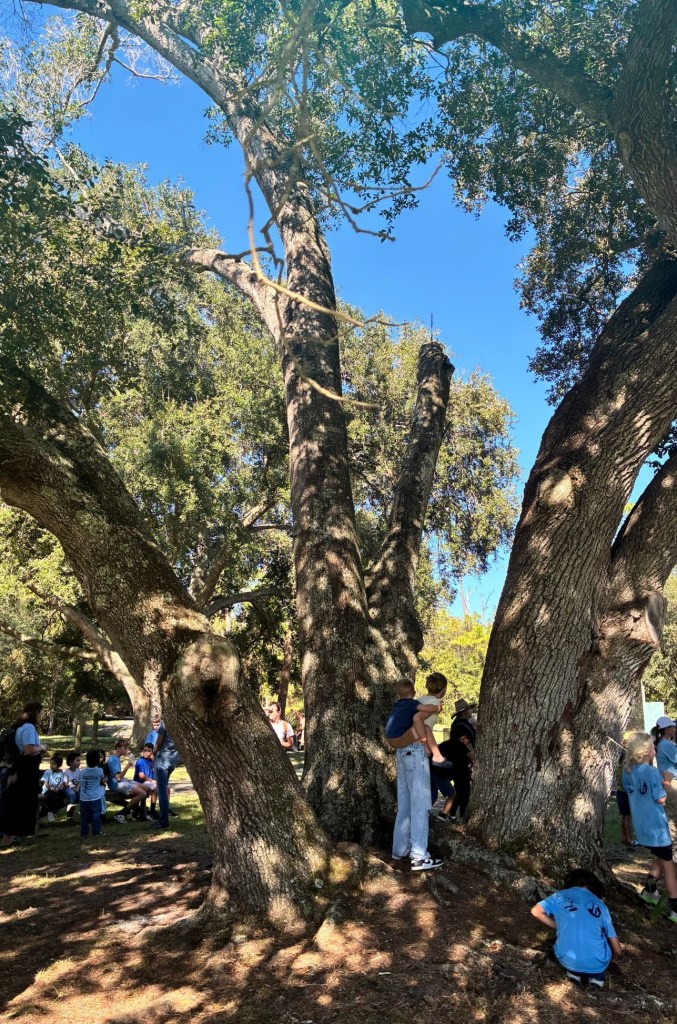
A Collective Teaching on Ancestry, Authorship, and the Freedom to Become
We are part of the whole, and whole in part.
We enter a world shaped by lives we did not live, decisions we did not make, and histories we did not witness.
Before we speak, we inherit language. Before we develop our beliefs, we encounter the convictions of others. Before we understand belonging, we are already participating in relationships that influence how we experience ourselves and the world.
Our inheritance extends beyond possessions. It includes knowledge, traditions, skills, opportunities, loyalties, fears, and ways of loving.
Some of what we receive sustains us. Other elements reflect conditions that no longer exist or expectations that restrict our capacity to grow.
Generative Inheritance is the transmission of capacity rather than the enforcement of continuity.
It recognizes that receiving something does not obligate us to reproduce it.
Our origins influence us. They do not possess us.
Preservation and Regeneration
Preservation protects what exists. Regeneration allows what exists to contribute to something new.
Both have value.
Language, cultural memory, ancestral knowledge, and hard-won wisdom deserve thoughtful care. Yet preservation becomes restrictive when continuity requires unquestioning obedience.
A family tradition can offer belonging while limiting individual freedom. A spiritual teaching can contain insight while discouraging inquiry. A belief that helped one generation survive can become an unnecessary constraint upon another.
What once protected life is not automatically what will sustain its future.
Generative Inheritance evaluates what we receive according to its living function rather than its age or authority.
Does it cultivate discernment? Support dignity? Expand our capacity to participate in life? Can it withstand honest examination?
The purpose of inheritance is not to make the future identical to the past.
It is to give the future something from which to grow.
Ancestry Is an Origin, Not an Instruction Manual
Our ancestors made choices within circumstances we may never fully understand.
Some faced economic dependence, violence, displacement, discrimination, or social expectations that narrowed their options. Others exercised agency, created beauty, and built meaningful lives despite difficult conditions.
Their experiences cannot be reduced to suffering, and we cannot presume to know what they would have wanted for us.
We can recognize, however, that the circumstances shaping their decisions are not necessarily those shaping ours.
A grandmother may have remained in a marriage because leaving threatened her survival.
A parent may have concealed vulnerability because emotional openness once carried consequences.
A family may have valued conformity because difference was dangerous.
Understanding these responses does not require adopting them.
We can honor the conditions under which someone survived without making those conditions the blueprint for our own lives.
Courage need not always take the form of endurance. Love need not require self-sacrifice. Belonging need not depend upon agreement.
Gratitude does not silence inquiry.
Understanding What Was Passed Down
Children learn through more than instruction.
They observe how caregivers respond to conflict, express affection, exercise authority, and interpret safety.
These experiences can shape expectations that persist long after the circumstances that produced them have changed.
Recognizing an inherited pattern creates an opportunity to examine it.
Fear can be understood without governing every decision. Grief can be acknowledged without becoming a permanent identity. Familiar ways of relating can be reconsidered when we recognize that they were learned rather than consciously chosen.
Understanding does not guarantee healing, and suffering does not need to become a spiritual lesson to deserve compassion.
Some experiences were harmful. Some losses remain losses.
Transformation does not erase the reality of what happened.
Nor are descendants responsible for repairing every wound in their lineage.
We can investigate the past, seek support, establish boundaries, and choose how to proceed without making our lives an endless project of ancestral repair.
Inheritance Without Surrendering Authorship
An inheritance becomes restrictive when the authority of its source is treated as permanent ownership over the receiver.
This can occur within families, education, religion, and culture.
A parent may confuse love with obedience. A teacher may mistake understanding for agreement. A spiritual community may equate devotion with preserving doctrine.
Yet genuine transmission does not require intellectual or spiritual dependence.
To receive wisdom is not to surrender authorship over what we believe.
We can learn from another person’s experience without adopting every conclusion.
We can recognize an influence without allowing it to determine our future.
This is where Generative Inheritance meets Differentiated Communion.
Connection shapes us, but it need not erase our distinctness.
A generative relationship supports capacities that extend beyond the relationship itself.
Across generations, this means sharing knowledge in ways that strengthen another person’s ability to examine, interpret, and choose.
The greatest gift we can transmit may be the capacity to discern what deserves to continue.
The Soil Is Alive
A seed carries possibility, but growth depends upon the conditions it encounters.
The soil is not an empty container awaiting purpose. It is already alive, with its own composition, limits, and relationships.
Growth emerges through interaction.
Inheritance works similarly.
What is passed down encounters a living person whose experiences and choices influence what it becomes.
A tradition may take a different form in a new generation. A skill may find an unexpected application. An old story may reveal meaning its original teller never anticipated.
Other inherited expectations may prove incompatible with the life being cultivated.
Every seed does not deserve soil.
Not because every seed lacks worth, but because possibility does not create entitlement.
We are not obligated to cultivate every belief, expectation, or responsibility that reaches us.
Discernment allows us to distinguish what nourishes life from what diminishes it.
Wombsource and the Nature of Transmission
A womb does not participate in creating life by producing an identical copy of itself.
It provides conditions through which a distinct life can emerge.
As a symbol, Wombsource offers an understanding of inheritance grounded in generativity rather than possession.
To generate is to make becoming possible without claiming ownership of what becomes.
A parent can nurture a child’s capacity to think without prescribing every conclusion.
A teacher can share knowledge while welcoming questions.
An artist can inspire another without demanding imitation.
A community can preserve its history while allowing new forms of belonging to emerge.
The value of transmission lies not in perfect replication but in what the receiver becomes capable of creating.
This requires humility from those who give.
Our children will encounter realities we have not experienced. Our students may discover what we have overlooked. Future generations will face questions our present understanding cannot resolve.
Love can prepare the ground without prescribing the shape of every life that grows from it.
Reality Gets Revision Rights
No inheritance guarantees that every interpretation within it is correct.
Family stories may be incomplete. Historical records may reflect the perspectives of those who controlled their preservation. Spiritual teachings may contain insight alongside assumptions shaped by their time.
Even cherished explanations remain open to further understanding.
Generative Inheritance therefore requires intellectual humility.
We can respect a source without treating it as infallible.
We can preserve a story while acknowledging what remains unknown.
We can allow new evidence and experience to change our understanding without dismissing everything that came before.
An inheritance remains alive when it can encounter reality without demanding that reality remain unchanged.
Revision is not automatic rejection.
It is the willingness to let understanding develop through continued encounter with life.
What We Choose to Pass Forward
Generative Inheritance concerns more than the patterns we release.
It also asks us to recognize what deserves cultivation.
Language that carries stories across generations.
Music that connects people through shared memory.
Humor that sustains families through hardship.
Craftsmanship, creativity, tenderness, practical knowledge, and courage.
These inheritances enrich the lives that receive them.
Our own choices will also influence those who follow us, whether through children, friendships, teaching, creative work, or community.
We cannot control how others will interpret what we leave behind.
We can consider whether our actions strengthen their capacity for independent thought and meaningful participation.
Are we encouraging curiosity or demanding agreement?
Are we offering care that supports agency?
Are we leaving room for discoveries beyond our understanding?
What we pass forward need not be a finished answer. It can be the freedom to ask a better question.
A Collective Invitation
This teaching belongs to anyone examining the relationship between inheritance and becoming.
To those who cherish their traditions.
To those questioning inherited expectations.
To those rediscovering beauty within complicated histories.
To parents, children, teachers, students, elders, and seekers who understand that wisdom can be shared without demanding surrender.
There is no single expression of generative inheritance.
Some will preserve traditions that continue to nourish them. Others will revise familiar practices, reconnect with forgotten histories, or establish distance from harmful relationships.
The invitation is not to adopt one conclusion.
It is to participate consciously in the relationship between what we have received and what we will create.
We are part of the whole, and whole in part.
We belong to histories larger than ourselves, yet each life introduces a distinct perspective into their unfolding.
We are neither the beginning of the story nor obligated to become its repetition.
We can honor what sustained life while cultivating possibilities that earlier generations could not access.
This is Generative Inheritance.
We receive. We discern. We cultivate. We transmit.
Not to preserve the past at the expense of becoming, but to keep its gifts available to a future that remains free to evolve.
The illusion is finality. The inheritance is possibility.
The Harvest Is Not Free
Posted on October 21, 2026 Leave a Comment
On Reverence, the Feminine, and the Responsibility of Receiving Life
An invitation to move from consumption to stewardship.
There is something profoundly revealing about the way we approach what we desire.
We want the puppy. We want to walk into the store, hold it against our chest, feel its warmth, receive its affection, take a photograph, and experience the sweetness of being chosen by something alive.
We want the delight, companionship, validation, and image of ourselves holding something beautiful.
But do we want to clean up after it, buy the food, wake up when it is sick, rearrange our schedules, pay the veterinary bills, learn its needs, and remain responsible when the novelty wears off?
Do we want the life, or simply the experience of having access to it?
These are not the same desire.
Within that distinction lives an uncomfortable truth about how we approach relationships, sex, parenthood, the feminine, and the living systems from which we continuously receive.
We have become extraordinarily skilled at desiring the harvest without understanding what it costs to cultivate the field, celebrating its abundance while overlooking the one who tends the soil.
The Puppy Store of Human Relationships
Imagine a world in which everyone could walk into a puppy store and enjoy the benefits of having a puppy without assuming responsibility for its life.
You could play with it, cuddle it, photograph it, and experience yourself as loving, nurturing, and connected.
When the puppy needed food, training, patience, medical care, or attention that interrupted your convenience, you could simply leave.
Someone else would handle the maintenance, absorb the expense, wake up at night, and ensure the puppy remained healthy enough for your next visit.
Now imagine that the person performing all that labor was invisible, not because they did not exist, but because the experience had been organized around the visitor’s enjoyment rather than the living being’s needs.
Would the visitor understand what caring for a puppy requires, or mistake their enjoyment of the puppy for their capacity to care for one?
Enjoying access to something living is not evidence that we are prepared to steward its life.
This is not a story about puppies. It is a story about desire disconnected from responsibility, and how easily we confuse the pleasure of receiving with the practice of loving.
Desire Is Not Stewardship
Desire is not inherently wrong. It is creative, drawing us toward intimacy, exploration, connection, and possibility.
But desire alone does not establish the capacity or willingness to sustain what we are calling into existence.
A person can desire marriage without understanding the daily work of partnership, sex without considering another person’s autonomy and experience, children without appreciating the demands of raising them, or a garden without wanting to tend the soil.
Wanting the outcome is not the same as consenting to its carrying costs.
When those costs go unacknowledged, they do not disappear. They are transferred.
Someone performs the labor, absorbs the disruption, and pays with time, energy, health, opportunity, or emotional capacity.
The question is whether the person benefiting recognizes who is carrying the weight.
This is where desire becomes an ethical question, moving beyond What do I want? toward something more consequential:
What am I asking another living being to carry so that I can experience what I want, and am I prepared to participate responsibly in sustaining it?
The Invisible Architecture of the Feminine
For generations, women have been expected to absorb enormous amounts of labor that remain largely invisible because they make other people’s lives function.
Remembering, anticipating, scheduling, emotionally translating, maintaining relationships, noticing what is missing, preparing for what comes next, managing households, caring for children, and making quiet adjustments that preserve everyone else’s comfort.
Not every relationship distributes these responsibilities in the same way. Men can be deeply nurturing and attentive stewards, just as women can approach relationships extractively.
Still, the historical and continuing imbalance in unpaid domestic and caregiving labor deserves examination.
When one person’s labor becomes the background condition of another person’s comfort, it can cease to register as labor at all.
Dinner appears, the child is prepared, the birthday remembered, the appointment scheduled, the conflict repaired, the connection maintained.
The person benefiting may genuinely believe both people contribute equally because they have never learned to perceive the work making their experience possible.
Invisible labor does not become weightless because the beneficiary cannot see it.
Nor does love make that labor free.
Someone pays, sometimes with money, sleep, career opportunities, physical health, or the slow depletion of a nervous system responsible for anticipating everyone else’s needs.
Sometimes the cost is access to their own desires.
This is why reverence must become more than appreciation.
Appreciation says, “Thank you for everything you do.”
Reverence asks, “Why have you been expected to do so much of it alone?”
The Womb Is Not an Amenity
Nowhere is the distinction between desire and responsibility more consequential than in reproduction.
A man may desire a child, imagining fatherhood, legacy, family traditions, the joy of watching someone grow, or seeing his own features reflected in another human being.
Those desires can be sincere and beautiful, but the desire to become a father is not biologically equivalent to becoming pregnant.
A woman who carries a pregnancy assumes physical realities that cannot be equally distributed.
Her body may undergo hormonal changes, nausea, pain, fatigue, altered metabolism, cardiovascular strain, medical complications, childbirth, recovery, and lasting changes to her health.
Pregnancy may be wanted and demanding, birth beautiful and risky, motherhood meaningful and profoundly sacrificial.
The demands may continue after the child arrives through feeding, healing, interrupted sleep, caregiving, identity shifts, and changes to work, relationships, and personal freedom.
These experiences vary enormously. Not every woman becomes pregnant, wants children, or experiences motherhood in the same way, and not every family is organized around a mother and father.
Wherever pregnancy is involved, however, its biological burden deserves explicit recognition.
You cannot distribute pregnancy equally, but you can distribute responsibility with an awareness of that inequality.
That is the difference between wanting a child and understanding what it asks of the person who carries one.
Before making parenthood a shared aspiration, we should ask:
Do I understand what my desire will cost another person’s body, and am I prepared to care for that person through the consequences?
Not only the baby, family identity, or photograph, but the person whose body made the photograph possible.
The womb is not an amenity attached to someone else’s dream.
It belongs to a sovereign human being, and her consent to carry life is not a blank check for everyone else to withdraw from her capacity.
The Body Is Not a Place You Visit for Pleasure
The same principle applies to sexual intimacy.
We speak frequently about sexual desire, but less often about the responsibility of receiving access to another person’s body.
What does it mean to touch someone with consideration, remain curious about their experience, and recognize that your desire does not establish their willingness?
Consent is ongoing, pleasure deserves mutual consideration, and intimacy is an encounter between two subjects rather than one person’s experience of another person’s body.
A body is not an attraction. It is inhabited.
There is a person there, with a nervous system, history, boundaries, capacity for pleasure and discomfort, and an interior experience that may differ substantially from your own.
Sexual intimacy can be playful, passionate, spontaneous, and deeply embodied without becoming careless.
Consent need not drain the magic from desire. Attention can deepen it.
Responsibility also extends beyond the immediate encounter, including honesty about sexual health, contraception, pregnancy risk, and recognition that physical intimacy may carry different emotional meanings for the people involved.
No one owes another person sex, commitment, or a particular emotional response because intimacy has occurred.
Everyone participating, however, owes the other person respect for their agency, boundaries, and humanity.
Access is not ownership. Desire is not entitlement.
Someone’s willingness to share their body does not erase your responsibility to consider their experience.
The Difference Between Consumption, Stewardship, and Reverence
There are three orientations toward receiving something precious.
Consumption asks: What can I get from this?
It measures value primarily through personal benefit, asking how an experience makes us feel, what it provides, and how it improves our comfort, status, or image.
Consumption is not always malicious. Often, it is simply unexamined.
But when it becomes our primary relational orientation, the needs of the source matter only insofar as they affect our ability to continue receiving.
Stewardship asks: What does this need in order to flourish?
It recognizes that living systems require care, maintenance, attention, and sustainable conditions.
Receiving something valuable may create responsibilities extending beyond the moment of enjoyment.
Stewardship notices depletion, participates in replenishment, and recognizes that good intentions do not substitute for actual capacity.
Reverence asks: Do I recognize the inherent worth of what I am encountering, beyond what it provides me?
This is the deepest shift.
Reverence does not merely improve consumption; it changes the relationship altogether.
The other person is no longer valuable because they nourish you. They are valuable because they are a person.
Their flourishing matters even when it does not benefit you. Their boundaries deserve respect when they interrupt your desires, their autonomy is not an inconvenience, their rest is not a failure to provide, and their refusal is not a theft of something you were owed.
If you truly revere the source, you do not organize your relationship to it around extraction.
You honor its existence beyond your access to it.
Reverence for the Feminine Cannot Remain Symbolic
We live in a world rich with language about the sacred feminine.
We celebrate the goddess, mother, womb, creator, nurturer, and life-giver, speaking of feminine wisdom, intuition, sensuality, fertility, and the mystery of creation.
But reverence becomes hollow when it remains an aesthetic rather than an ethic.
What does it mean to praise the feminine while disregarding women’s lived experiences, celebrate motherhood while overlooking maternal exhaustion, or desire a woman’s nurturing qualities while resisting responsibility for your own emotional life?
What does it mean to admire her sensuality while neglecting her pleasure, call her powerful while expecting her to carry an unsustainable burden, or celebrate her generosity without protecting her freedom to say no?
The feminine cannot be revered in theory while women are neglected in practice.
Reverence cannot be conditional on reproduction, service, beauty, youth, or generosity.
A woman does not become sacred because she carries a child, nor does she lose her worth if she cannot or chooses not to.
She does not owe nurturing because she possesses the capacity for it, and she is not required to become someone’s source of comfort, inspiration, healing, or belonging.
The language of the feminine can hold spiritual meaning without reducing actual women to prescribed roles.
There is danger in worshipping the symbol while overlooking the human being.
A woman can become so celebrated as a source that her need to receive is forgotten, so admired for her endurance that no one questions the burden, so praised for holding everything that nobody notices she has nowhere to set anything down.
Reverence that requires a woman to disappear into what she provides is not reverence.
It is extraction wearing sacred language.
The Farmer Deserves to Eat
Consider the farmer who prepares the ground, plants the seeds, monitors the weather, protects the crops, tends the soil, and waits through seasons when nothing appears to be happening.
The harvest is visible. The labor that makes it possible often is not.
People arrive when the fruit is ripe, enjoy its sweetness, praise its beauty, and celebrate its abundance.
But do they understand what it took to grow, recognize the conditions required for another harvest, or notice when the soil has been depleted?
Most importantly:
Does the farmer get to eat?
This question belongs in families, workplaces, communities, caregiving systems, and every arrangement in which one person’s sustained labor becomes another person’s ordinary convenience.
Who maintains the conditions that allow everyone else to flourish? Who gets replenished, receives care without earning it through usefulness, or is expected to keep producing because they have always managed to do so?
There is a dangerous assumption that capable people have unlimited capacity, that carrying a load proves its appropriateness, and that surviving depletion demonstrates sustainability.
But endurance is not evidence of equity.
A harvest sustained by the exhaustion of its cultivator is not abundance. It is deferred collapse.
A relationship that flourishes only because one person continually sacrifices their nourishment has not solved the problem of maintenance.
It has hidden the cost.
Stop Helping the Structure Pass the Test
There is another responsibility in this conversation, and it belongs to those of us who have learned to overfunction.
Sometimes we conceal the true carrying costs of a relationship through our own accommodation.
We say yes when we mean no, rearrange our lives before anyone asks, anticipate needs before they are expressed, explain away inconsistencies, manage disappointment, generate connection, and protect others from experiencing the implications of their limited participation.
Then we wonder why the structure collapses when we finally bring our actual weight into it.
The answer is not to manufacture pressure or turn relationships into adversarial examinations.
It is to stop removing ourselves from the equation.
Tell the truth earlier, let needs become visible, allow others to experience disappointment without immediately rescuing them, and observe what they willingly contribute when we are no longer compensating for what they do not.
Stop helping the structure pass the test by pretending you weigh less than you do.
This is not about becoming demanding. It is about becoming legible.
A relationship should be evaluated against the reality of the people inhabiting it, not an artificially convenient version of one partner.
If two people discover that their needs, capacities, and visions do not align, that information is useful, especially before marriage, cohabitation, children, or other commitments make the consequences harder to navigate.
A structure that cannot accommodate the truth of its inhabitants is not made stronger by their silence.
The Relational Maintenance Conversation
What if we stopped entering major commitments on the strength of shared desire alone and became genuinely curious about what building a life together requires?
Not only Do we want children? but How will we share sleepless nights, respond if pregnancy changes someone’s health, and protect each other’s identities, careers, and capacity for rest?
Not only Do we love each other? but How do we repair conflict and communicate limitations without making the connection disappear?
Not only Are we sexually attracted to each other? but Can we discuss consent, pleasure, contraception, boundaries, changing desire, and what intimacy means to each of us?
Not only Do we want to live together? but Who notices, plans, cleans, maintains, and remembers, and how will we recognize when one person’s contribution becomes unsustainable?
These conversations are not the death of romance.
They are an expression of respect for what romance hopes to become.
They also require observation, not merely promises.
How does someone respond to inconvenience or handle a no? Do they notice depletion, communicate limitations without withdrawing care, participate in repair, and make room for the life they say they want?
Readiness is not established by the intensity of desire. It is demonstrated through the capacity to participate in maintenance.
No one needs to be perfect, and no relationship can guarantee equal contribution in every season.
Illness, pregnancy, grief, disability, career changes, and ordinary life create periods of asymmetry.
But temporary asymmetry within a reciprocal relationship differs from an arrangement that depends indefinitely on one person’s unacknowledged labor.
The goal is not an immaculate accounting ledger, but a shared commitment to notice, communicate, adjust, and care.
The Right to Remain Whole
We often speak about love as giving our time, bodies, attention, devotion, and even life.
Generosity can be one of love’s most beautiful expressions, but devotion cannot be measured solely by how much someone is willing to surrender.
A person should not have to become depleted to demonstrate love, risk their health or autonomy to prove devotion, continually perform emotional maintenance to establish commitment, or disappear as an individual to be considered a good parent.
The purpose of stewardship is not to maximize what can be extracted from a living system.
It is to preserve the conditions in which life can flourish.
That includes the life of the giver.
The farmer, mother, lover, caregiver, and person who has spent years making sure everyone else has enough are not merely the infrastructure of someone else’s becoming.
They are becoming, too.
And they are whole now.
Not after the child is grown, the relationship is secure, or everyone else’s needs have been met.
Now.
A Different Kind of Love
The next evolution of our relationships begins with a different question.
Not What can this person give me?
Not even How much do I love what we could become?
But:
What kind of life are we creating through the way we treat one another?
Does our connection generate nourishment or chronic depletion? Does access produce consideration or entitlement? Can we receive without consuming, give without disappearing, honor limits without abandoning connection, and celebrate another person’s gifts without treating them as obligations?
This is not a call to stop desiring.
It is a call to mature our desire.
Love is not merely the joy of receiving something beautiful. It is the willingness to participate in the conditions that allow beauty to remain alive.
It means noticing the person behind the labor, the body behind the birth, the human being behind the intimacy, the farmer behind the harvest, and the source behind the gift.
None exists solely for our consumption.
We do not honor life by celebrating what it gives us while neglecting what it needs.
We honor life by becoming responsible participants in its flourishing.
Because the puppy store closes, the photograph fades, the novelty wears off, the child grows, and the seasons change.
Life continues long after the moment of receiving.
The question is whether we are willing to remain present for the tending.
The harvest is not free.
The source is not expendable.
And reverence is not what we say about life.
It is how we care for life when receiving from it is no longer convenient.
The Illusion Is Finality
Posted on October 7, 2026 Leave a Comment
There Is No Final Version Required to Be Whole Now
We have been taught to imagine growth as a journey toward arrival.
Heal the wound.
Learn the lesson.
Break the pattern.
Become secure.
Find your purpose.
Build the life.
Reach enlightenment.
Finally become the person you were always supposed to be.
Even much of our language around healing quietly contains the premise that somewhere ahead of us exists a more complete version of ourselves and that our present self is merely the construction site.
what if there is no final version?
And what if that does not make us incomplete?
What if wholeness is not the destination of becoming, but the ground from which becoming occurs?
A tree is wholly a tree before its next ring.
A person is wholly themselves before their next revelation.
Creation can be complete in this moment without being finished forever.
Quite possibly we have confused completion with finality.
& that confusion has made an infinite process feel like a deficiency.
The Violence of the Final Version
There is a subtle cruelty hidden inside endless self-improvement.
It can convince us that every newly discovered pattern is evidence that we were previously inadequate.
We find another wound and think, I still have work to do.
We become dysregulated and think, I thought I had healed this.
We encounter a new relational edge and wonder why all our previous growth didn’t prepare us to cross it perfectly.
We change our minds and accuse our former selves of being wrong.
We outgrow an identity and treat the identity we once needed as evidence of unconsciousness.
Growth becomes an endless renovation project in which the house is never permitted to become a home.
There is always another room to repair.
Another wall to knock down.
Another spiritual practice.
Another attachment wound.
Another nervous-system intervention.
Another revelation promising to deliver us, finally, to ourselves.
But there is a different possibility:
There is no final version required to be whole now.
Read that again.
You do not have to stop evolving to qualify as whole.
Wholeness does not require omniscience.
It does not require perfect regulation, flawless communication, complete integration, permanent certainty, or the absence of contradiction.
You can discover a blind spot while whole.
You can develop a skill while whole.
You can regret something while whole.
You can grieve while whole.
You can contradict yesterday while whole.
You can stand at the edge of something you have never encountered before with absolutely no idea what comes next
and still be whole.
Because growth is not necessarily evidence of prior incompleteness.
Sometimes growth is simply what wholeness does when it encounters life.
A Tree Does Not Apologize for Its Next Ring
A tree does not produce another ring because it has failed at being a tree.
The ring is evidence that a whole living organism encountered another season.
Rain came.
Heat came.
Winter came.
Nutrients changed.
Branches broke.
Roots deepened.
The environment touched the organism, and the organism responded.
That is life.
My favorite tree lies in the middle of a forest fallen…

Its roots lay on its side standing over 6ft tall and even after it fell it continued to grow UP.
Why would human development be fundamentally different?
We encounter love and discover capacities that solitude could never reveal.
We encounter rupture and discover boundaries we did not previously know we needed.
We encounter grief and find rooms inside ourselves we had never entered.
We encounter another person whose way of being exposes an edge in our own development.
We encounter beauty and suddenly possess language for something that had lived wordlessly inside of us for years.
The new ring does not prove the previous tree was unfinished.
The fallen tree was not the end… only another beginning.
It proves the tree was and is alive.
What if we stopped asking, When will I finally become who I’m supposed to be?
And began asking:
What is life inviting this already-whole being to become now?
That question contains no deficiency.
Only participation.
The Gift of Paradox
One of the greatest signs of maturation is our increasing capacity to hold truths that appear to contradict one other.
I am whole and becoming.
I can know myself deeply and continue surprising myself.
I can be autonomous and need relationship.
I can have boundaries and remain open.
I can be powerful and tender.
I can trust myself and revise my conclusions.
I can love someone and release them.
Something can have been real and no longer belong in my life.
An ending can be true without being finality itself.
These are not always contradictions.
They are often paradoxes.
A contradiction asks us to determine which proposition must be discarded.
A paradox asks whether our frame is large enough to hold both.
And that is part of what consciousness keeps doing:
expanding the frame.
Opening the aperture 👁️
The goal is not to become internally uniform.
Integration does not require amputating every opposing impulse until we become philosophically tidy.
Sometimes integration is becoming spacious enough to stop demanding that the paradox collapse.
A diamond does not contradict itself because one facet catches blue while another catches gold.
The multiplicity is part of the gem. 💎
Being Known Without Being Finished
This changes intimacy too.
We often imagine being known as though another person could eventually complete the investigation.
Learn enough history.
Witness enough wounds.
Understand enough patterns.
Map enough preferences.
Decode enough defenses.
eventually arrive at the definitive explanation of who we are.
But a living person is not an archaeological site containing one final artifact buried at the bottom.
There may be no bottom.
Not because the person is withholding themselves.
Because the next thing to know may not exist yet.
New experience creates new information.
Relationship activates dormant capacities.
Loss reorganizes meaning.
Choice changes trajectory.
Insight alters behavior.
Behavior creates different experiences.
Different experiences generate different selves.
You could know someone with extraordinary intimacy today and encounter them years later to discover something genuinely new not because your previous knowing was false, but because reality continued happening.
This offers us a more reverent model of intimacy:
I will know you as deeply as you allow me today without mistaking today’s knowing for the boundary of what you can become.
To love a living thing is not to finish knowing it.
It is to remain available to revelation.
The Illusion Is Finality
This is where endings become interesting.
Because endings are real.
Relationships end.
Seasons end.
Identities end.
Bodies end.
Stars end.
To deny endings would be another refusal to meet reality.
But maybe the illusion is not ending.
Perhaps the illusion is finality.
An ending can complete a form without completing existence.
A relationship can end and continue shaping the people who inhabited it.
A former identity can die and become material for the next one.
An experience can complete itself and leave behind information that reorganizes everything after it.
The end of one structure creates space in which another structure can emerge.
So we do not need to abolish endings.
We can let endings create space.
space is not nothing.
Space is one of creation’s fundamental conditions.
There must be space between notes for music.
Space between words for meaning.
Space between people for intimacy.
Space between what exists and what might exist for possibility.
Space between breath…
Without space, there is no movement.
Without movement, no emergence.
Without emergence, creation becomes a museum of itself.
The Sacredness of an Unfinished Universe
There is something profoundly beautiful to me about imagining Creation this way.
Not merely as something that was created, but as something continuously capable of creating.
Emergence.
Expansion.
Regeneration.
Form becoming another form.
Consciousness encountering itself through endlessly changing arrangements of life.
From that perspective, our becoming is not evidence that the Creator left something unfinished & becoming is part of the design.
Our own evolution becomes an ode to that generativity.
Not:
I must finally discover who I am.
But:
I get to participate in who I AM becoming.
Not:
One day I will become healed enough to deserve peace.
But:
I am whole now, and from that wholeness I can continue healing.
Not:
Eventually I will arrive.
But:
Every arrival reveals another horizon.
The masterpiece does not need to be incomplete for the Artist to keep creating.
That may be one of the most beautiful things about creation:
Nothing needs to be unfinished in order for there to be more.
Eye Am Learning
There is freedom in being able to say:
I don’t know yet.
Not as a confession of inadequacy.
As reverence for emergence.
I can hold a belief without turning it into a prison.
I can recognize a pattern without pretending I have discovered the final explanation.
I can know myself deeply without converting myself into a fixed identity.
I can let reality revise me.
I can remain curious.
I can learn.
I can become.
And none of that requires me to stand outside myself waiting for the completed version to arrive.
There is no completed version coming to rescue this one.
There is only this whole being, meeting this moment, becoming through contact with what is here.
And then another moment.
Another season.
Another ring.
Another revelation.
Another death.
Another emergence.
Another horizon.
that is the magic of space.
that is the gift of paradox.
that is why consciousness can look directly at itself and still say:
Eye am learning.
Because I am alive.
Completion belongs to moments.
Wholeness belongs to being.
Becoming has no finish line.
The illusion is finality.
& what a gift it is that there is still more…
where magic remains the mystery of the elusive unknown.
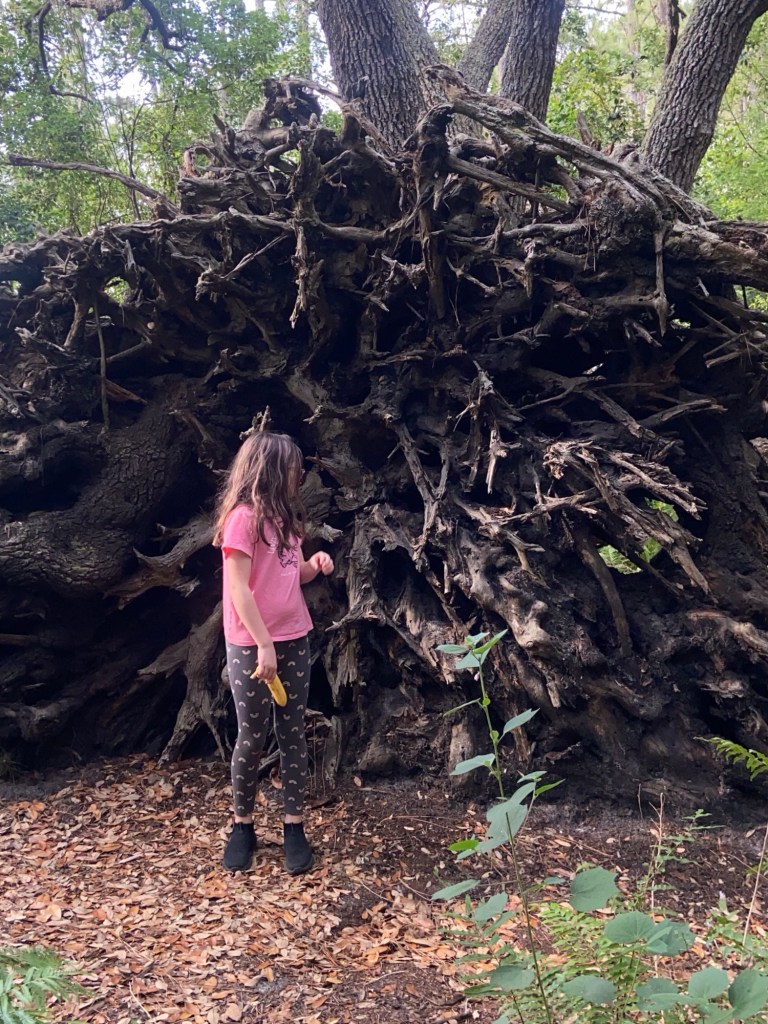
She is quite literally standing before what came before her, while being nowhere near whatever she will become.
& yet she is already whole.
So are you. ❤️
The Woman Who Endures Is Not the Model of Love
Posted on September 8, 2026 Leave a Comment

A collective teaching on self-abandonment, emotional provision, and the relational skills many of us were never taught
Many of us inherited relationship models built for survival, not necessarily for intimacy.
We watched women praised for how much they could endure and men praised for how much they could produce. One learned to derive worth from sacrifice; the other from performance. One became responsible for maintaining the emotional world of the family while the other became responsible for maintaining its material world.
Both roles may once have served important functions. Both can contain genuine love, devotion, and sacrifice.
However, when either becomes the entirety of a person’s role, imbalance follows.
Many of us are now trying to build relationships differently without ever having been shown what different looks like.
We are learning skills our parents may not have possessed, repairing patterns they may not have recognized, and trying to create emotional security without having consistently experienced it ourselves.
That deserves accountability.
It also deserves compassion.
Because we cannot change what we refuse to see, but we also cannot shame ourselves for not knowing what no one ever taught us.
We Mistook Women’s Endurance for Love
Under patriarchal frameworks, a woman’s ability to tolerate relational suffering has often been elevated into a desirable quality in partnership.
She is patient.
She understands.
She forgives.
She gives him grace.
She considers his childhood, his stress, his responsibilities, his wounds, his limitations, his intentions.
She keeps the family together & slowly, accommodation can become self-abandonment while still being called love.
A woman can become so skilled at maintaining connection that she learns to override the internal signals telling her that something is wrong.
She learns to soften the truth before speaking it.
She asks whether her needs are reasonable before asking whether they are being met.
She becomes highly attuned to how her feelings might affect everyone else while becoming increasingly disconnected from how everyone else’s behavior is affecting her.
Eventually, she may become so competent at compensating for relational imbalance that the imbalance itself becomes difficult to see.
The family continues functioning.
The children are cared for.
The appointments are remembered.
The relationships are maintained.
The emotional temperature of the household is monitored.
Ruptures are repaired.
Life keeps moving.
So we call her strong.
… yet endurance is not evidence of a healthy ecosystem.
Sometimes what we call strength is simply a person’s extraordinary capacity to survive conditions that should have changed.
& sometimes what we call devotion is self-abandonment wearing a moral halo.
We Cannot Examine Mothers Without Examining Fathers
There is an important conversation happening about the effect a mother’s self-abandonment can have on her children.
It matters.
Children learn relationship by observing relationship.
When a child repeatedly watches their mother override herself to preserve attachment, they may internalize the belief that love requires self-sacrifice, that boundaries threaten belonging, or that keeping another person is more important than keeping yourself.
That pattern does not develop in a vacuum.
The mother is not the only parent modeling love.
If the father is emotionally unavailable to his partner, chronically disengaged, unable to communicate his inner experience, unwilling to repair ruptures, or leaves the emotional architecture of the family primarily in someone else’s hands, the child is learning from him too.
The child may learn that love means chasing someone who is emotionally unavailable.
They may learn that material provision substitutes for emotional presence.
They may learn that one person’s needs are negotiable while another person’s withdrawal must be accommodated.
They may learn that women maintain relationships while men participate in them when convenient.
A mother’s self-abandonment may teach a child one half of the pattern.
A father’s emotional neglect may teach the other.
We cannot hold mothers solely responsible for the emotional health of children while treating fathers as peripheral characters in the emotional ecosystem of the family.
Children are learning not only from how their parents treat them.
They are learning from how their parents treat each other.
Many Men Were Taught to Perform, Not Relate
This is where compassion for men must enter the conversation without becoming an excuse for emotional nonparticipation.
Many men have been socialized to derive worth from performance.
Competence. Productivity. Achievement. Money. Status. Provision. Mastery.
The external world offers clear feedback.
Do the job well and receive recognition.
Build the company.
Master the craft.
Earn the degree.
Solve the problem.
Get promoted.
Make more money.
Become indispensable.
There is a scoreboard.
Emotional intimacy offers no such certainty.
There is no promotion for learning to tolerate vulnerability. No award for remaining present during a difficult conversation. No public recognition for learning how to name fear, repair a rupture, receive another person’s pain without immediately becoming defensive, or communicate an internal experience that cannot be solved.
For a man whose identity is organized around competence, emotional intimacy may therefore become the place where he feels least competent.
And human beings often retreat from the places where we feel inadequate.
Instead of developing emotional skill, he may devote himself more intensely to the skills he already knows how to perform.
Work.
Craft.
Achievement.
Money.
Status.
The world rewards him there.
So he returns there.
A painful cycle can emerge.
He feels inadequate emotionally, so he retreats into work. Work restores his sense of competence and worth. His family experiences less emotional presence. His partner asks for greater engagement. He experiences her dissatisfaction as further evidence of his inadequacy at home, so he retreats more deeply into the place where he knows how to succeed.
Meanwhile, she compensates for what is missing.
She overfunctions relationally while he overfunctions professionally.
Her adaptation protects the family from the consequences of his.
His adaptation protects him from confronting the emotional skills he has not developed.
Because both are functioning exceptionally well in their respective roles, the underlying dysfunction can remain hidden for years.
The world receives his mastery. His family receives what remains.
This is not an indictment of ambition.
It is an expansion of what it means to provide.
Money is provision.
So is presence.
Security is provision.
So is emotional responsiveness.
A home is provision.
So is the ability to repair what happens inside it.
Our families require not only what we can produce with our hands, intellect, labor, or money.
They also require what we are willing to cultivate within ourselves.
Neither Person Can Carry a Partnership Alone
This is not a story about women being good and men being bad.
These dynamics are not universal, nor are they exclusive to heterosexual relationships. People of any gender can withdraw, pursue, overfunction, self-abandon, dominate, accommodate, neglect, or become emotionally dependent.
The deeper issue is relational responsibility.
A healthy partnership cannot be created by one sufficiently healed person.
One person cannot communicate for two.
None of those differences necessarily makes either person wrong.
An invitation to discover where our defenses begin.
One person cannot manufacture reciprocity.
One person cannot create mutual vulnerability.
One person cannot repair a rupture the other refuses to acknowledge.
One person cannot single-handedly create emotional safety while simultaneously being deprived of it.
No amount of understanding someone’s wounds can substitute for that person’s responsibility to examine what those wounds produce inside the relationship.
Understanding creates compassion.
It does not automatically create compatibility & compassion should never require us to continuously absorb the consequences of another person’s refusal to grow.
Most of Us Were Never Taught How to Catch the Ball
This is where our conversations about relationships often become unnecessarily cruel.
Many of us are trying to create forms of intimacy we never witnessed.
We are expected to know how to regulate ourselves, communicate securely, establish boundaries, maintain individuality inside attachment, repair conflict, negotiate sex and money, parent consciously, recognize unhealthy dynamics, remain compassionate without becoming codependent, and somehow know exactly when a relationship requires more work and when it requires an ending.
Some of us grew up watching almost none of this.
We are pulling a rabbit out of a hat while being crucified for dropping a ball nobody taught us how to catch or even taught us to recognize as a ball.
Adulthood eventually makes learning our responsibility but responsibility is not the same thing as retroactive omniscience.
We cannot stand at forty with knowledge acquired through decades of experience and condemn the twenty-five-year-old who did not possess it.
We cannot replace patriarchal expectations with therapeutic perfectionism.
The old standard told women:
A good woman stays.
The new standard cannot become:
A healed woman would have known better.
She would have spotted every red flag.
never have become dysregulated.
communicated perfectly.
maintained flawless boundaries.
never chosen an emotionally unavailable person.
known exactly when to leave.
That is not liberation.
That is another impossible standard wearing the language of healing.
Responsibility Begins With Consciousness
Healing does not require us to shame the person we were before we understood the pattern.
It asks us what we will do now that we can see it.
If I recognize that I abandon myself to preserve attachment, can I practice remaining loyal to myself while loving another person?
If I recognize that vulnerability makes me feel incompetent, can I develop emotional literacy instead of escaping into the places where I already feel powerful?
If I learned that money was the primary way a man provides for his family, can I expand my definition of provision to include emotional presence?
If I learned that motherhood requires endless sacrifice, can I show my children that boundaries and love can coexist?
If I was never taught repair, am I willing to learn?
If neither of us knows how to create secure intimacy, are both of us willing to become students?
Because these are skills.
Emotional literacy is a skill.
Repair is a skill.
Boundaries are a skill.
Listening is a skill.
Vulnerability is a skill.
Speaking truth without cruelty is a skill.
Remaining present when another person’s experience makes us uncomfortable is a skill.
Knowing how to receive love is a skill.
And none of us should be ashamed that we were not born knowing how to do these things.
But once we recognize that we do not know how, we become responsible for learning.
One partner cannot undertake the apprenticeship for two.
Love Is an Exchange, Not an Extraction
Love should circulate.
Healthy partnership does not require one person to become an inexhaustible emotional resource from which everybody else draws.
That does not mean relationships are perfectly equal at every moment.
There will be seasons when one person carries more.
Illness happens. Grief happens. Careers collapse. Children need us. Bodies change. People become exhausted. Life is inherently uneven.
Balance is not a spreadsheet.
Balance is the shared understanding that when circumstances change, both people’s humanity still matters.
There is generosity without entitlement.
Autonomy without abandonment.
Support without servitude.
Compassion without self-erasure.
Provision without emotional absence.
Vulnerability without loss of self.
Accountability without humiliation.
Love without domination.
Neither person’s humanity becomes the price of keeping the relationship alive.
That is the difference between sacrifice that sometimes occurs within love and chronic self-abandonment performed in the name of love.
What We Heal Becomes Their Inheritance
If we are thinking generationally, the goal cannot simply be to keep families physically intact.
We should be asking what model of love exists inside them.
Children deserve to see that a boundary does not mean abandonment.
That disagreement does not mean love has disappeared.
That a man can be powerful and emotionally present.
That a woman can be loving and self-possessed.
That vulnerability and strength can occupy the same body.
That apology does not diminish authority.
That another person’s pain matters without becoming entirely yours to manage.
That nobody has to disappear for a relationship to survive.
We cannot only teach our daughters to tolerate less.
We must teach our sons to participate more.
And ultimately, we need to teach all of our children both skills:
How to remain themselves in relationship & how to meaningfully show up for another person.
The goal is not independence so absolute that nobody needs anyone.
Nor is it devotion so absolute that one person disappears into everybody else’s needs.
The goal is interdependence.
Two people capable of standing on their own feet who nevertheless choose to turn toward one another.
A Different Definition of Strength
It’s time to stop measuring a woman’s strength by how much suffering she can absorb without leaving.
Strength can be the capacity to remain present to herself while loving another person.
To tell the truth before resentment has to scream it.
To recognize when understanding another person’s pain has become an excuse for ignoring her own.
To receive rather than only give.
To stop calling deprivation devotion.
& to stop measuring a man’s worth solely by what he can produce for the external world.
Strength can also be the courage to enter the world within.
To become emotionally literate.
To remain present when intimacy exposes inadequacy.
To repair rather than retreat.
To cultivate relationship with the same seriousness with which he cultivates his craft.
Because the opposite of self-abandonment is not selfishness.
It is self-possession.
The opposite of emotional neglect is not dependency.
It is participation.
We are not responsible for having inherited imperfect maps.
We are responsible for what we teach ourselves once we realize the maps are incomplete.
Maybe that is the work of our generation:
Not finding someone willing to tolerate more.
Not becoming so independent that we never risk needing another human being.
Not assigning all responsibility for family health to mothers or all responsibility for material survival to fathers.
But in tandem learning the skills required to create relationships in which both people participate in sustaining the world between them & giving our children a different inheritance:
Love does not mean I will abandon myself to keep you.
Love does not mean I will abandon you to preserve myself.
Love asks us to learn how to remain present to ourselves, present to each other, and responsible for what we create between us.
Friction Is Not Always a Verdict
There is one final distinction that matters.
Just because a partner does not naturally speak the relational language you need does not automatically mean the relationship is doomed.
Sometimes incompatibility is real. Sometimes two people genuinely require different levels of intimacy, autonomy, communication, sexuality, family structure, or emotional engagement, and trying to bridge that gap would require one or both people to abandon themselves.
But sometimes what we call incompatibility is actually a refusal to learn.
A refusal to become curious about how another person experiences love.
A refusal to develop a skill simply because it does not come naturally.
A refusal to tolerate the discomfort of being a beginner in someone else’s emotional language.
And if that refusal remains unexamined, the same conflict may surface through different partners. The faces change, but the friction returns.
At some point, the question becomes:
Is every partner asking too much of me, or is each relationship revealing the same place where I have rejected, neglected, or underdeveloped part of myself?
That reflection applies to both people.
One partner may repeatedly choose people who require them to self-abandon in order to preserve connection.
Another may repeatedly choose partners whose needs eventually expose how defended they are against vulnerability, emotional responsibility, dependence, or intimacy.
Neither pattern is healed by finding someone who simply never activates it.
Sometimes the activation is the information.
This does not apply to relationships involving abuse, coercion, intimidation, manipulation, or violence. Those dynamics are not invitations to become more tolerant, more compassionate, or more relationally skilled. Safety comes first, and those relationships need to end.
But in relationships where two basically safe people encounter genuine difference, friction does not automatically require defense, prosecution, or immediate separation.
Sometimes friction is simply what happens when two different processors meet.
One person needs time before speaking.
The other needs reassurance before space feels safe.
One communicates through actions.
The other needs words.
One thinks linearly.
The other processes relationally and contextually.
One experiences a request as connection.
The other initially experiences it as pressure.
The question is whether both people can become curious enough to say:
“This is not how I naturally experience the world, but I care enough about you to learn how you do.”
That is relational maturity.
Growth does not mean one person continually translating themselves while the other remains unchanged.
It means both people developing enough flexibility that neither has to disappear for the relationship to survive.
So friction is not always evidence of incompatibility.
Sometimes it is an invitation.
An invitation to learn another language.
An invitation to recognize the parts of ourselves we have rejected because they once felt unsafe, weak, demanding, dependent, or unfamiliar.
An invitation to become more capable of love than the model we inherited taught us how to be.
The question is not whether two people are different.
They will be.
The question is:
When difference appears, do we become adversaries or students?
The Architecture of Aliveness: Reciprocity, Sovereignty, and the Systems That Let Life Breathe
Posted on August 24, 2026 Leave a Comment
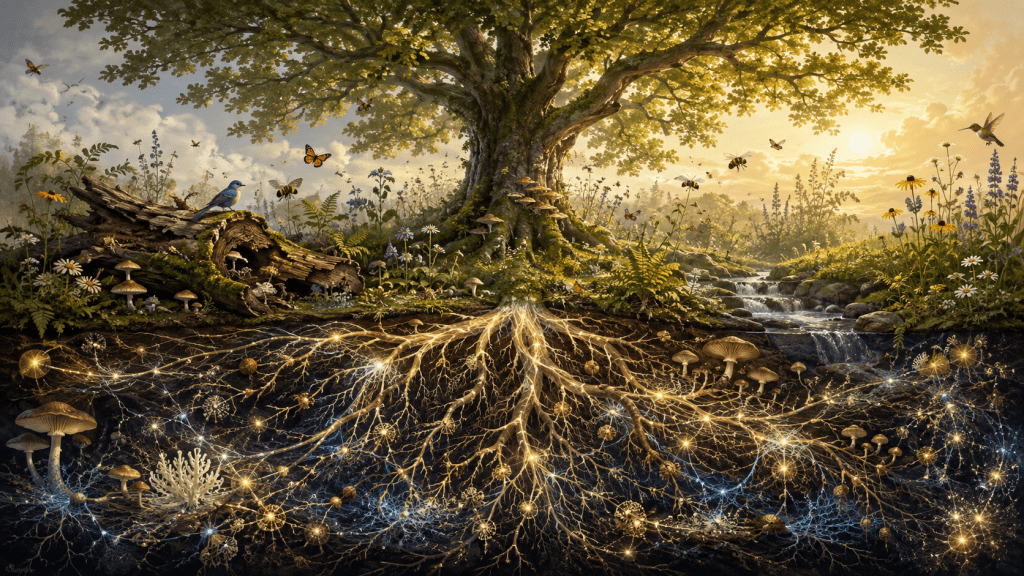
How relationship, language, contrast, and reciprocity turn consciousness into form
We live in a culture obsessed with outcomes.
What did you build?
What did you achieve?
What did you acquire?
What did the relationship become?
Did the idea work?
Did the investment pay off?
But beneath every outcome is a quieter question:
What kind of architecture allowed that outcome to exist in the first place?
A forest does not survive because one tree works harder than the others. A body does not thrive because one organ compensates forever for the dysfunction of the rest. A relationship does not become healthy because one person is more emotionally intelligent, more generous, more organized, more self-aware, or more willing to carry what no one else will.
Living systems endure through circulation.
Energy moves.
Resources move.
Information moves.
Care moves.
Responsibility moves.
Power moves.
And when those things stop circulating, systems begin to distort.
The organism that gives indefinitely without receiving is eventually depleted.
The organism that receives indefinitely without contributing becomes dependent on extraction.
The family member who carries everyone else’s emotional labor may be praised as “the strong one” while quietly being sacrificed to maintain the appearance of harmony.
The employee who constantly compensates for dysfunctional systems becomes indispensable and exhausted at the same time.
The partner who anticipates every need eventually becomes the infrastructure of the relationship rather than one of its participants.
And sometimes we call this love.
Sometimes we call it loyalty.
Sometimes we call it being a good daughter, a good mother, a good employee, a good partner, a good person.
But a system that requires one organism to continually subsidize the whole is not reciprocal simply because everyone has become accustomed to the arrangement.
The old confusion between love and control
Many people learn love through channels that are also used to control them.
Provision can become leverage.
“I pay for everything, therefore I decide.”
Care can become leverage.
“After everything I’ve done for you, you owe me.”
Emotional vulnerability can become leverage.
“Look what you made me feel.”
Silence can become leverage.
“I will withdraw until you become uncomfortable enough to comply.”
Affection can become leverage.
“I will give closeness when you behave correctly and remove it when you don’t.”
The tragedy is that the original channel may still register as love.
A person can deeply value provision while fearing dependence because provision once came with authority.
Another can deeply value care while fearing dependence because care once came with obligation.
So adulthood becomes a strange paradox:
we long for the very forms of support we learned not to trust.
And many people solve this by becoming fiercely independent.
They stop needing.
They stop asking.
They become competent enough to ensure nobody will ever hold survival, comfort, belonging, or stability over their heads again.
It works.
Until love arrives.
Because intimacy eventually requires something independence cannot provide:
the ability to receive without surrendering sovereignty.
That is a different skill.
Dependency is not the enemy
The opposite of codependence is not invulnerability.
Human beings are interdependent organisms.
We depend on farmers we will never meet.
We depend on microbes living inside our bodies.
Trees exchange nutrients with fungi.
Pollinators expend energy feeding themselves while simultaneously transporting reproductive material across entire ecosystems.
Infants require adults.
Adults require communities.
Bodies require environments.
No organism is entirely self-generated.
The real question is not whether dependence exists.
It is:
What happens to power when dependence appears?
Healthy interdependence says:
I can need you without becoming owned by you.
You can help me without acquiring authority over me.
I can care for you without creating an invoice.
You can receive from me without becoming indebted.
We can affect one another without becoming responsible for controlling one another.
That is a radically different architecture from either enmeshment or extreme independence.
It is relationship without captivity.
Contrast may be one of nature’s oldest creative technologies
Nature is full of reproductive strategies.
Sexual reproduction.
Asexual reproduction.
Parthenogenesis.
Hermaphroditism.
Sequential sex change.
Budding.
Cloning.
Bipotential developmental structures that later differentiate.
Life does not appear committed to one simplistic model of generation.
It experiments.
It recombines.
It differentiates.
It returns variation into the field.
One of the most interesting questions in evolutionary biology is why sexual reproduction exists at all when asexual reproduction can be more efficient.
Sex is expensive.
It requires another organism.
Only part of each parent’s genome is transmitted.
Finding mates consumes energy.
And yet sexual reproduction persists.
Why?
One major advantage is recombination.
Difference produces novelty.
The point is not merely replication.
Life gains adaptive possibility by mixing what was previously separate.
That principle extends far beyond biology.
Two perspectives can produce an idea neither held independently.
Two cultures can generate a new artistic language.
Two disciplines can reveal something neither could see from inside its own assumptions.
Two people with different nervous systems can expose strengths and weaknesses invisible to each other alone.
Difference is not automatically incompatibility.
Sometimes difference is creative raw material.
The problem begins when difference becomes hierarchy.
When one form declares itself superior.
When one mode of perception claims authority over all others.
When contrast becomes conquest instead of collaboration.
Healthy systems do not require every organism to become the same species of intelligence.
A forest would collapse if every organism tried to become a tree.
Light, sound, word, form
Across spiritual traditions, philosophy, and science, human beings have repeatedly returned to a similar sequence.
First there is perception.
Then vibration.
Then articulation.
Then form.
Ancient Egyptian mystical traditions place enormous emphasis on luminous consciousness: awareness recognizing something deeper than the personality moving through ordinary life.
Sufi philosophy has long explored existence through sound, rhythm, harmony, and vibration.
Christian mystical traditions have treated the spoken word as generative: language does not merely describe reality; it participates in shaping human experience.
Yorùbá cosmology contains sophisticated conceptions of generative power, creation, destruction, social organization, motherhood, spiritual force, and the capacity to shape existence itself.
These traditions do not need to be collapsed into one religion to notice the philosophical pattern:
awareness perceives. resonance connects. language differentiates meaning. action gives meaning form.
This sequence happens constantly.
Someone senses discomfort before knowing why.
Then the nervous system vibrates with it.
Then language arrives:
“I feel excluded.”
“I need space.”
“I want more.”
“I don’t agree.”
“I’m afraid.”
“I love you.”
Those words change the relational field because they introduce information that did not exist there before.
The other person can now respond to reality instead of guessing.
From that exchange, structure can emerge:
a boundary.
an agreement.
a schedule.
an apology.
a commitment.
a refusal.
a changed behavior.
This is how consciousness becomes architecture.
Silence is not always peace
Many families maintain harmony through silence.
One person absorbs conflict.
One person never expresses anger.
One person becomes the emotional regulator.
One person learns never to need anything.
One child becomes mature beyond their years because the adults around them cannot regulate themselves.
From the outside, the family may look stable.
Inside, somebody is paying the bill.
This pattern scales.
Organizations do it.
Communities do it.
Cultures do it.
Relationships do it.
We often confuse the absence of visible conflict with health.
But suppressed information does not disappear.
It becomes resentment.
Fatigue.
Illness.
Withdrawal.
Explosions that appear to come from nowhere.
Generational repetition.
The question is not whether a system appears peaceful.
It is:
Who is being sacrificed to maintain that peace?
Truth can temporarily disturb harmony while protecting the life underneath it.
Counterfeit harmony protects the structure while sacrificing the organism.
The danger of overengineering life
Human intelligence is remarkable because it allows us to model reality before acting.
We anticipate.
Plan.
Measure.
Predict.
Design.
Those abilities protect us.
But every gift has a point where its own strength becomes distortion.
Planning becomes control.
Discernment becomes surveillance.
Boundaries become walls.
Self-sufficiency becomes isolation.
Care becomes management.
Insight becomes domination.
And eventually we can become so good at observing life that we stop participating in it.
This is the danger of mistaking the map for the territory.
A person can analyze every attachment pattern and still be terrified to love.
Study every trauma response and still avoid vulnerability.
Understand every spiritual symbol and still remain disconnected from the body.
Engineer every variable and accidentally suffocate the very life the structure was meant to support.
The purpose of a rib cage is to protect the lungs.
It does not protect them by preventing them from expanding.
Good architecture creates enough safety for movement.
A bridge does not determine where a traveler must go.
It simply makes crossing possible.
A harness does not remove height.
It creates enough protection for someone to move through it.
A boundary should work the same way.
So should commitment.
So should community.
Structure exists to support life.
Life does not exist to preserve structure.
The observer must eventually return to the body
Modern consciousness has become extraordinarily skilled at observation.
We watch ourselves thinking.
We analyze our childhoods.
Track our nervous systems.
Interpret our relationships.
Study our personalities.
Monitor our performance.
There is value in this.
But there is also a threshold where self-awareness becomes self-separation.
The observer becomes so dominant that the participant disappears.
One can become endlessly aware of life without actually inhabiting it.
True integration requires return.
The body.
Food.
Sleep.
Work.
Touch.
Laughter.
Sex.
Grief.
Children.
Friendship.
Movement.
Ordinary conversation.
The spiritual question may not be:
How far beyond the body can consciousness travel?
It may be:
How much consciousness can remain present while fully inhabiting a body?
Expansion without return becomes fragmentation.
Awareness without embodiment becomes exile.
The goal is not to escape being human.
It is to become more fully present inside humanity.
Reciprocity is not identical exchange
Healthy reciprocity does not mean every contribution must be numerically equal.
A forest does not keep a spreadsheet.
Different organisms contribute differently.
One brings nutrients.
Another decomposes waste.
Another provides shade.
Another pollinates.
Another controls population.
Another creates habitat after death.
Equality does not require identical function.
But health does require circulation.
Over time, everyone cannot continuously draw from the same source.
A healthy relationship may include periods when one partner earns more.
One carries more childcare.
One needs more emotional support.
One is sick.
One is grieving.
One has more capacity.
The question is not whether imbalance ever exists.
It is:
Does the system naturally seek rebalancing, or does imbalance become its permanent operating model?
That is the difference between support and sacrifice.
Care should not become currency
One of the most radical forms of love is clean generosity.
Here.
This is for you.
No hidden contract.
No future weaponization.
No moral debt.
No demand that the receiver become smaller because they accepted something.
The same is true of provision.
Providing for someone does not grant ownership.
Paying does not confer sovereignty.
Helping does not create hierarchy.
And receiving does not automatically create weakness.
The deeper task is learning to exchange resources without converting resources into power over another person.
That applies to:
money,
time,
attention,
emotional labor,
sex,
housing,
knowledge,
status,
caregiving,
access,
and affection.
What matters is whether the gift remains a gift after it is given.
Words can become bridges or weapons
Language creates relational reality.
Not because saying something magically guarantees an outcome, but because language changes what information exists inside a system.
“I need time” creates a different experience than disappearing.
“I’m angry” creates a different experience than punishment.
“I would have liked to be included” creates a different experience than silent resentment.
“No” creates a boundary.
“Yes” creates permission.
“I was wrong” creates the possibility of repair.
“I don’t know yet” creates honest ambiguity.
“I love you” creates exposure.
Words do not control what happens next.
They make reality available for response.
That distinction is everything.
Healthy communication is not using language to compel another person into the desired outcome.
It is using language to make one’s internal reality legible while leaving the other person free.
Expression without colonization.
The deepest form of power may be participation
There is an old fantasy of power that imagines mastery as total control.
Control the body.
Control nature.
Control uncertainty.
Control other people.
Control the future.
Control emotion.
Control perception.
Control loss.
But living systems repeatedly undermine that fantasy.
No tree controls the forest.
No cell controls the body.
No organism controls evolution.
No partner controls relationship.
No parent controls the future adult their child will become.
Resilient systems do not survive because nothing unpredictable happens.
They survive because they can respond to change without losing their organizing integrity.
That suggests a different definition of power:
not command, but capacity.
Capacity to adapt.
Capacity to remain centered.
Capacity to receive information.
Capacity to repair.
Capacity to release what no longer works.
Capacity to tolerate difference.
Capacity to love without possessing.
Capacity to be changed without being destroyed.
This is sovereignty at its most mature.
Not:
nothing can affect me.
But:
I can be affected without surrendering authorship of myself.
The architecture of aliveness
Perhaps the deepest mistake humans make is confusing preservation with life.
We try to preserve identities.
Relationships.
Families.
Institutions.
Beliefs.
Bodies.
Roles.
But life itself survives through change.
Cells die.
Forests burn.
Skin sheds.
Relationships transform.
Cultures evolve.
Children separate.
Bodies age.
Ideas collapse.
New structures emerge.
Life does not preserve itself by preventing transformation.
It preserves itself through its ability to metabolize transformation.
So perhaps the question is no longer:
How do we make everything safe enough that nothing changes?
Perhaps it is:
What kind of architecture allows change without unnecessary destruction?
Enough boundary to protect.
Enough openness to receive.
Enough structure to hold.
Enough space to breathe.
Enough individuality to choose.
Enough reciprocity to sustain.
Enough truth to correct the system.
Enough humility to update the model.
Enough mystery that life remains alive.
A corset can create beautiful structure while restricting breath.
A spine creates structure while allowing movement.
That may be the distinction worth carrying forward:
Burn the corset. Keep the spine.
Do not eliminate structure.
Refine it.
Do not eliminate need.
Remove coercion from it.
Do not eliminate difference.
Stop turning difference into hierarchy.
Do not eliminate uncertainty.
Build enough self-trust to remain present inside it.
Do not eliminate dependence.
Transform it into interdependence.
Do not eliminate power.
Ask what the power serves.
The strongest systems may not be those in which one organism becomes indispensable.
They may be those in which each organism retains its integrity while participating freely in the whole.
That is true in forests.
Families.
Bodies.
Communities.
Relationships.
Maybe even consciousness itself.
Life is not asking us to become less individual.
It may be asking us to become individual enough that connection no longer requires conquest.
And connected enough that sovereignty no longer requires isolation.
That is not perfect equilibrium.
It is living reciprocity.
A structure with lungs.
A system capable of breathing.
A form strong enough to hold life with an open palm rather than a closed fist.
Systems Over Symptoms
Posted on July 13, 2026 Leave a Comment
Every living system reveals itself.
A forest reveals itself through its canopy. A river reveals itself through its watershed. A family reveals itself through the nervous systems of its members. The body reveals itself through sensation. An organization reveals itself through its culture. A society reveals itself through the people it produces.
The visible is always revealing the invisible.
The moment we begin studying systems instead of symptoms, life becomes more coherent. We stop asking, What is happening? and begin asking, What produced this? We stop reacting to outcomes and begin stewarding the conditions that create them.
Differentiation is the discipline that makes this possible.
It is the ability to remain connected without abandoning yourself. It is the capacity to observe a system without becoming consumed by it. It is the quiet strength to respond from your own center instead of reacting to someone else’s anxiety.
Nature has always understood this.
Leaves do not wilt independently of their roots. A river does not pollute itself. An ecosystem does not collapse because of a single tree. Living systems distribute energy, nutrients, stress, and information through relationship.
Human beings are no different.
Families distribute emotion through nervous systems. A regulated nervous system offers calm before a single word is spoken. An anxious nervous system shapes the emotional climate of an entire home. Children borrow regulation before they ever develop it for themselves. Adults transmit fear, peace, resentment, security, and hope long before language explains any of it.
Emotions move.
When they are welcomed, they flow. When they are resisted, they settle. The body keeps score. Breath becomes shallow. Muscles tighten. Sleep changes. Digestion shifts. Inflammation rises.
The symptom is intelligent communication from a system seeking restoration.
Organizations obey the same principles.
Pressure flows toward the people who consistently overfunction. Unspoken expectations become burnout. Invisible labor accumulates inside the most conscientious people until an entire organization quietly depends upon work no one ever acknowledges.
Cultures function the same way.
The values repeatedly rewarded become the values that shape society. Systems reliably produce what they are designed to produce.
Invisible infrastructure is rarely appreciated until it fails.
Roots stabilize the forest beneath the soil. Mycorrhizal networks quietly exchange nutrients between trees. Healthy soil stores water long before drought arrives. The most important work in nature happens underground.
The same is true of our lives.
Trust is invisible infrastructure. Character is invisible infrastructure. A regulated nervous system is invisible infrastructure. Healthy leadership is invisible infrastructure. Strong families are invisible infrastructure.
We rarely celebrate the systems quietly sustaining life because stability is silent. We notice them when they break.
An electrician doesn’t repair a flickering light by arguing with the bulb. The work begins behind the wall. The hidden system receives attention before the visible symptom.
Our homes quietly teach the same lesson.
Electricity moves through hidden circuits. Water flows through unseen pipes. Foundations distribute weight before walls ever feel the load. Everything essential operates beneath the surface.
Sometimes repairing a home becomes an invitation to reflect on the life unfolding inside it. Every interruption invites attention. Every disruption creates an opportunity to ask a better question.
What system needs my care?
Study the soil before diagnosing the tree.
Study the environment before judging the nervous system.
Study the nervous system before judging the behavior.
Every visible outcome has invisible roots.
The wild untouched forest heals itself.
Life is organized toward restoration when the conditions allow it.
Human beings carry this same design.
Beneath the noise of endless opinions, inherited anxiety, constant stimulation, and external expectations, your body possesses an extraordinary intelligence. It is continually orienting toward balance, coherence, and repair.
Healing is stewardship.
It is creating the conditions that allow life to do what it has always known how to do.
Sometimes the greatest act of wisdom is not adding another optimization strategy.
It is removing enough interference for truth to emerge from within.
A regulated nervous system influences a family. A healthy family strengthens a community. Healthy communities shape resilient institutions. Resilient institutions cultivate flourishing cultures.
Living systems grow from the inside out.
The temptation is always to solve the largest problem first.
Life follows a different order.
The seed before the tree.
The root before the fruit.
The foundation before the home.
The environment before the nervous system.
The nervous system before the behavior.
One differentiated person brings more harmony into a room than a hundred dysregulated people demanding change from one another.
Presence reorganizes systems.
Reactivity destabilizes them.
The future is not built by managing symptoms.
It is built by faithfully tending the internal garden before reaching for the external landscape.
Every visible outcome grows from an invisible system.
Steward the invisible.
The visible will follow.
The Gift of Connection Is Revelation
Posted on June 24, 2026 Leave a Comment

you seek.
There comes a moment in every meaningful connection when we are tempted to make another person responsible for our sense of self.
We may not realize we are doing it. It often disguises itself as longing, love, attachment, hope, or the desire for certainty. Yet beneath all of those experiences is a subtle question:
What does this person mean about me?
Do they choose me?
Do they stay?
Do they see me?
Do they want what I want?
Do they validate what I feel?
Without realizing it, we begin attaching our worth, our safety, and our identity to a living, breathing human being who is constantly changing and evolving, just as we are.
This is where suffering often begins.
Not because people are unreliable or love is dangerous but because we have anchored ourselves to something that was never meant to carry the weight of our entire existence.
Human beings are fluid. They are seasons. They are weather. They are oceans. Their feelings change. Their priorities change. Their circumstances change. Their understanding of themselves changes.
Trying to build our sense of worth upon another person’s movements is like trying to build a house upon a wave.
The wave is not wrong for moving.
It is simply being what it is.
As are they.
The invitation is not to love less.
The invitation is to root more deeply.
When we begin to shift our attention away from what another person means about us and toward what the connection is revealing within us, something remarkable happens. The relationship ceases to be a verdict and becomes a mirror.
The question is no longer:
What does this mean about my value?
The question becomes:
What is this showing me about myself?
Perhaps it reveals a fear of abandonment.
Perhaps it reveals a longing for intimacy.
Perhaps it reveals a wound that has been waiting to be acknowledged.
Perhaps it reveals a capacity for joy, devotion, tenderness, or love that we had forgotten existed within us.
The connection itself is no longer the destination.
It becomes the teacher.
This does not diminish the significance of the relationship. If anything, it honors it more deeply. We stop asking people to define us and begin allowing them to reveal us.
Some people enter our lives for decades. Some arrive for only a season. Some stay long enough to become family. Others pass through like a beautiful storm.
Duration does not determine significance.
Some of the most profound revelations arrive through the briefest encounters.
What matters is not how long someone stays.
What matters is what becomes visible through their presence.
As we begin to understand this, we naturally return to our own bodies.
We notice the places where we have been reaching outside ourselves for certainty.
We notice the stories our minds create in the spaces where reality has not yet fully formed.
We notice the old strategies that emerge when we feel vulnerable.
The urge to control.
The urge to secure.
The urge to define.
The urge to know.
Instead of immediately acting upon them, we pause.
We breathe.
We listen.
We become curious.
The space between what is happening and what we fear might happen becomes a place of awareness rather than panic.
We begin to understand that uncertainty is not always a problem to solve. It is simply the incubation period of reality.
Life is still unfolding.
The answer is still forming.
You cannot force the bloom before its season.
Remain present enough to witness it.
This is where trust begins.
Not the trust that everything will go according to plan.
Not the trust that every relationship will last.
Not the trust that every desire will be fulfilled.
A deeper trust.
The trust that we can remain connected to ourselves while life reveals what comes next.
The trust that our worth does not rise and fall with another person’s choices.
The trust that we can stay rooted even while everything around us continues to move.
This is not detachment.
It is participation without self-abandonment.
It is loving fully without requiring ownership.
It is allowing others to remain free while remaining deeply connected to ourselves.
The more we practice this, the more we discover that people are not stable ground.
They were never meant to be.
They are fellow travelers.
Companions.
Mirrors.
Teachers.
Expressions of life meeting itself in countless forms.
The stable ground is found within our own awareness.
Within our own capacity to remain present.
Within our willingness to stay in relationship with our own unfolding truth & from that place, love becomes lighter.
It is no longer carrying the impossible burden of proving who we are through another.
What began as external attachment becomes internal coherence.
We discover that the sacredness was never contained within a person, outcome, or promise. It emerged through the way we related to the experience itself.
As our relationship with ourselves changes, our relationship with the world changes with it.
The need to secure, define, or possess begins to soften.
We stop asking others to hold together what is asking to be integrated within ourselves.
The split between spirit and flesh, desire and discernment, heart and reality begins to dissolve.
We become whole enough to let life reveal itself.
The gift of connection is not validation.
The gift of connection is revelation.
What is revealed, again and again, is that the love we seek through others has been quietly teaching us how to return home to ourselves all along.
HOME•O•STASIS
The state of home within
The capacity to remain centered within ourselves as life unfolds in love, anchored by a strong spine of truth.
Love without a spine becomes self-abandonment.
A spine without love becomes armor.
The integration is both a soft heart and a strong spine.
Center. Love. Truth.
OHM: Om or Aum considered primordial sound and vibration from which all things emerge and into which all things return.
You stop asking to be fed when you remember you are the garden and the elements that sustain it and the gardener simultaneously.

MATRIX: Returning to the Living Source
Posted on May 22, 2026 Leave a Comment
A collective teaching for the age of artificial intelligence, extraction, and remembrance
Civilization stabilizes when human beings remember to prioritize the wellbeing of children above ego, power, image, profit, or personal gratification.
Because the nervous system of a child does not thrive on domination, conflict, instability, emotional warfare, or chronic survival.
It thrives on safety, regulation, respect, presence, and love.
Future generations inherit the conditions humanity normalizes now. What we don’t face today our children face tomorrow.
Those who prioritize the children of tomorrow are the stewards we can trust.
No civilization can sustainably survive while severed from the source of life.
I. The Original Meaning of “Matrix”
The word matrix comes from the Latin:
- mātrix – womb, pregnant being, source, breeding female
- from māter – mother
Originally, a matrix was not:
- a machine,
- a digital network,
- a simulation,
- or a mathematical grid.
It meant:
the living source from which life emerges.
The matrix was:
- the womb,
- the generative field,
- the nourishing enclosure,
- the mother-source of continuity itself.
Life moved through her.
II. The Shift From Living Source to Functional System
Over centuries, through:
- empire,
- industrialization,
- mechanization,
- colonial extraction,
- bureaucratic systems,
- technological expansion,
the meaning of matrix evolved.
The womb became:
This linguistic shift mirrors a civilizational shift:
- mold,
- structure,
- framework,
- system,
- machine architecture.
humanity increasingly treating living systems as functions instead of relationships.
The source became operationalized.
The mother became infrastructure.
The living became consumable.
III. What We Do to the Earth, We Do to the Womb
The Earth itself functions as a matrix.
She:
- nourishes,
- regulates,
- generates,
- sustains,
- receives,
- transforms,
- births life continuously.
The way humanity treats the planet reflects the way many societies have historically treated women’s bodies:
- extractive,
- exploitative,
- controlling,
- consumptive,
- disconnected from reciprocity.
Deforestation.
Pollution.
Resource stripping.
Soil depletion.
Water poisoning.
These are reflections of a civilization disconnected from reverence for life itself.
Because: what is exploited externally is usually first disconnected internally.
A culture that loses reverence for the source eventually consumes the very systems keeping it alive.
IV. The Mother Regulates Life
Before language,
before ideology,
before identity,
before technology,
every human being first experiences rhythm through the mother.
The first regulation every nervous system encounters is:
- heartbeat,
- breath,
- chemistry,
- emotional state,
- stress level,
- safety,
- nourishment.
The womb is not passive.
It is an active environment of biological communication.
A dysregulated mother living in chronic fear, scarcity, violence, or survival transmits stress into the developing child’s system.
This is interdependence.
The body remembers conditions long before the mind can explain them.
When societies continuously:
- exhaust mothers,
- isolate women,
- commodify bodies,
- suppress autonomy,
- force survival conditions,
those conditions ripple generationally.
Life flows through the mother.
When the source is depleted,
all life downstream feels the consequences.
V. The Suppression of Women and the Evolution of Society
Across civilizations, women’s reproductive capacity became tied to:
- inheritance,
- labor,
- empire,
- religious control,
- property systems,
- population growth,
- social order.
Over time, wombs became politically managed territory.
This control has appeared through:
- forced dependency,
- denial of autonomy,
- reproductive coercion,
- sexual violence,
- economic exclusion,
- medical dismissal,
- institutional control over birth itself.
When the source of life is controlled,
society becomes easier to control.
Because disconnected people:
- consume more,
- fear more,
- depend more,
- obey more easily,
- lose intergenerational continuity,
- forget their own internal authority.
A system disconnected from the living source must constantly feed itself through extraction.
VI. Artificial Intelligence and the Expansion of the Synthetic
Humanity now stands inside another transformation:
the rise of artificial intelligence and hyper-technological civilization.
AI itself is not the enemy.
The danger is that systems built without reverence for life eventually consume life to sustain themselves.
When everything becomes:
- content,
- productivity,
- optimization,
- data,
- branding,
- performance,
- extraction,
human beings slowly become disembodied from:
- nature,
- community,
- intuition,
- emotional presence,
- physical reality,
- interdependence.
The original meaning of matrix reminds us:
life was never meant to function as machinery alone.
Technology without stewardship becomes consumption accelerating itself.
VII. From Parasite to Steward
A parasite extracts without reciprocity.
A steward nurtures what sustains life.
Humanity now faces a collective choice:
- continue feeding systems that deplete the source,
or - become conscious caretakers of the systems we depend upon.
The opposite of parasite is not perfection.
It is stewardship.
It is reciprocity.
It is guardianship.
A ghost moves through life disconnected.
A gardener understands:
what is nourished grows.
VIII. Returning to Intentional Relationship
To heal collective systems,
humanity must reconsider relationship itself:
- relationship to the body,
- relationship to women,
- relationship to mothers,
- relationship to Earth,
- relationship to technology,
- relationship to consumption,
- relationship to future generations.
Every person came through:
- a womb,
- a lineage,
- a mother,
- and her mother,
- and her mother before her.
To honor life is to remember:
none of us arrived here independently.
Autonomy matters.
Sovereignty matters.
But true sovereignty is not domination over others.
It is stewardship over self.
Real sovereignty respects:
- agency,
- consent,
- autonomy,
- dignity,
- and the free will of others.
Because what we honor within ourselves,
we become capable of honoring within humanity.
IX. The Choice of This Era
This era is not asking humanity whether technology should exist.
It already exists.
The real question is:
will intelligence remain connected to life?
Will society continue:
- extracting from the source until collapse,
or
- rebuilding systems rooted in reciprocity, regulation, stewardship, and embodied humanity?
Every living system eventually collapses when it devours its own foundation.
X. Remembering the Original Matrix
The original matrix was not artificial.
It was alive.
It meant:
- womb,
- source,
- mother,
- generative field,
- living continuity.
All systems ultimately answer to the conditions that sustain life itself.
The mother is not merely a function.
She is:
- the first environment,
- the first rhythm,
- the first regulation,
- the first home.
How humanity treats the source of life determines the future life is able to become.
XI. The Deepest Remembrance of This Era
Humanity changes when human beings stop abandoning themselves.
No system changes sustainably when the consciousness creating it remains unchanged.
The external world is not separate from the internal world.
Civilizations emerge from collective nervous systems, beliefs, wounds, values, fears, and inherited identities.
Which means:
- exploitation outside reflects fragmentation inside,
- domination outside reflects unresolved fear inside,
- consumption outside reflects emptiness inside,
- disconnection outside reflects disconnection from self.
Decolonizing the Mind, Body, and Spirit
To decolonize is to recognize:
- inherited conditioning,
- internalized domination,
- survival identities,
- unconscious programming,
- and systems of thought that disconnect human beings from their own sovereignty and humanity.
Many people inherit scripts that teach them:
- productivity over presence,
- performance over authenticity,
- obedience over discernment,
- consumption over connection,
- perfection over wholeness,
- fear over embodiment.
Conscious humanity requires self-authorship.
The courage to ask:
Who am I beneath conditioning?
And:
What kind of human being do I choose to become?
Integration of the Shadow
Healing is not becoming artificially positive.
It is becoming whole.
Every human carries:
- grief,
- rage,
- fear,
- shame,
- longing,
- contradiction,
- unmet needs,
- inherited trauma,
- unconscious behaviors.
The shadow is not evil.
It is the unintegrated self.
What is denied internally becomes projected externally.
A society unable to face its collective shadow becomes reactive, polarized, and easily manipulated.
Integrated people become harder to control through fear because they are no longer running unconsciously from themselves.
Loving Ourselves While Remaining Committed to Refinement
True self-love is not stagnation.
Nor is it self-rejection disguised as self-improvement.
It is:
accepting oneself fully while remaining devoted to conscious evolution.
To love oneself is to:
- tell the truth,
- become accountable,
- honor the body,
- regulate the nervous system,
- cultivate integrity,
- and refine one’s character consciously.
The goal is not perfection.
The goal is coherence.
Self-Governance as Collective Transformation
A healthy society cannot emerge from chronically dysregulated individuals disconnected from responsibility.
Self-governance means learning to steward:
- the mind,
- the body,
- emotions,
- behavior,
- attention,
- speech,
- energy,
- choices,
- relationships,
- consumption,
- and impact.
Freedom without responsibility becomes chaos.
Control without freedom becomes oppression.
Mature sovereignty requires both autonomy and accountability.
Refusing Inherited Scripts
Many people live inside identities they never consciously chose.
Inherited scripts come from:
- family systems,
- culture,
- religion,
- media,
- institutions,
- economics,
- trauma,
- generational fear.
These scripts shape:
- self-worth,
- relationships,
- success,
- love,
- safety,
- and possibility.
Human beings reclaim their humanity by refusing unconscious inheritance and choosing conscious participation in who they become.
The Future Begins Within
The systems humanity creates always reflect the consciousness humanity embodies.
No technological advancement substitutes for:
- wisdom,
- emotional maturity,
- integrity,
- self-awareness,
- and conscious stewardship.
The future is built through millions of individual decisions:
- what people normalize,
- what they embody,
- what they tolerate,
- what they heal,
- what they pass on,
- and how they choose to relate to themselves and others.
The greatest revolution of this era is not domination over the external world but remembering how to become fully present, responsible, sovereign, and alive within ourselves first.
To integrate both light and dark within,
so we remain whole in a fragmented world.
To become so fully inhabited by our own soul
that our presence itself becomes remembrance.
Not through performance.
Not through superiority.
But through embodiment.
A life so consciously lived
that others feel permission to return to themselves simply by witnessing it.
To cultivate an inner world stable enough
for the soul to finally rest inside the body instead of fleeing from it.
To anchor heaven on Earth through how we:
- speak,
- love,
- regulate,
- nourish,
- grieve,
- create,
- and steward life around us.
To become:
- a light on a hill,
- a beacon in the storm,
- a star in the night,
- a candle protected by golden light.
Not because we are untouched by darkness
but because we learned how to carry light consciously within it.
The Body Knows What Nourishes You
Posted on May 18, 2026 Leave a Comment
A reflection on relationships, embodiment, and learning to trust the way connection feels
There’s a beautiful shift that happens when you begin healing, slowing down, and fully inhabiting your life again.
Your body becomes honest.
You begin noticing which connections:
- expand you,
- inspire you,
- soften you,
- energize you,
- regulate you,
- and bring you deeper into yourself.
You begin naturally gravitating toward relationships that feel:
- grounding,
- reciprocal,
- intentional,
- emotionally spacious,
- and nourishing to your nervous system.
This awareness changes everything.
Healthy connection is not only understood intellectually. It is felt somatically.
The body recognizes:
- presence,
- consideration,
- emotional reciprocity,
- consistency,
- intentionality,
- warmth,
- and genuine care.
It recognizes when connection creates:
- more peace,
- more creativity,
- more vitality,
- more softness,
- more clarity,
- and more connection to life itself.
This applies to every relationship:
- romantic,
- friendships,
- family,
- business,
- community,
- and even the relationship we have with ourselves.
One of the most transformative things we can learn is how to return our awareness inward and ask:
How do I feel in my body after connecting with this person?
Do I feel:
- more grounded?
- more inspired?
- more connected to myself?
- more emotionally open?
- more energized?
- more relaxed?
- more alive?
The body always responds honestly.
Healthy relationships often create a sense of:
- spaciousness,
- emotional safety,
- mutuality,
- ease,
- inspiration,
- and grounded excitement for life.
They support our nervous system instead of overwhelming it.
They allow us to remain connected to ourselves while also building meaningful connection with others.
Perhaps one of the most important realizations is this:
We cannot sustainably create nourishing relationships while remaining disconnected from ourselves.
The standards we desire in relationships must first become embodied internally.
When we cultivate:
- self-connection,
- emotional honesty,
- groundedness,
- presence,
- nervous-system care,
- healthy boundaries,
- and a genuinely nourishing life,
our relationships naturally begin reflecting those same qualities back to us.
Embodiment changes attraction.
We become drawn toward:
- reciprocity,
- emotional maturity,
- grounded presence,
- intentionality,
- mutual care,
- and relationships that support the life we are consciously building.
Connection becomes less about intensity and more about nourishment.
Less about performance and more about presence.
Less about emotional urgency and more about shared peace.
One of the deepest relational shifts happening right now is that caregivers, especially women, are beginning to recognize where their care is being received, expected, and depended upon without equal consideration in return.
Modern life has normalized chronic depletion.
We live inside systems built around:
- production,
- performance,
- urgency,
- emotional suppression,
- and constant output.
Eventually, someone carries the weight of that imbalance.
Most often, it is the caregivers/mothers.
The one who:
- anticipates needs,
- regulates emotions,
- remembers everything,
- nurtures connection,
- creates emotional safety,
- softens conflict,
- holds the family together,
- and continues giving long after their own nervous system is exhausted.
Caregivers often become the emotional infrastructure of entire relationships, families, and communities. Yet many are quietly starving for the very care they naturally provide to others.
Because caregivers need care too.
They need:
- consideration,
- reciprocity,
- emotional attunement,
- rest,
- tenderness,
- support,
- and relationships where they are also emotionally held.
Without that, the structure eventually collapses because too much weight is resting on one person’s nervous system.
Perhaps one of the most healing shifts we can make collectively is learning how to not only receive care, but consciously nourish the people nourishing us.
Because healthy love is never built through extraction.
It is built through mutual restoration.
This is the beauty of learning to trust the body.
The body naturally guides us toward:
- what expands us,
- what sustains us,
- what inspires us,
- and what supports us in becoming more fully alive.
From that place relationships become something more beautiful:
Not something we use to escape ourselves,
but something that deepens our connection to the life we are already learning to inhabit fully.
Some connections fascinate us because they awaken something ancient, instinctive, mysterious, or transformative within us. Some teach us through peace. Others teach us through fire. Eventually, we remember we do not have to hold onto what hurts in order to prove our worth. Aligned love nourishes. It regenerates. It expands life, deepens presence, and returns us more fully to ourselves.
Freedom is Love
Posted on April 4, 2026 Leave a Comment

Unlearning the Script. Rebuilding Love, Partnership, and Parenthood from Truth.
There’s a quiet assumption running through most relationships that no one questions out loud:
That love requires merging.
That closeness requires constant access.
That commitment requires proximity.
And if you don’t follow those rules, something must be wrong with you.
I don’t experience it that way.
For me, freedom is love.
Not freedom as distance.
Not freedom as avoidance.
Not freedom as detachment.
Freedom as truth without pressure.
Freedom as connection without control.
Freedom as being fully myself and still being met.
Where the Script Replaces Truth
Most people aren’t building relationships from within themselves.
They’re inheriting them.
Unspoken agreements like:
Living together equals seriousness
Constant communication equals care
Sacrificing space equals commitment
Predictability equals safety
These aren’t universal truths.
They’re repeated patterns that became normalized.
So when someone doesn’t fit the script, they get labeled:
too much
not committed
difficult
bad partner
But what’s actually happening is simpler:
They’re not performing a role they never agreed to.
The Cost of Unquestioned Norms
When you follow a structure that doesn’t match your internal truth, something fractures.
You stay.
You show up.
You do everything right.
But underneath:
your body tightens
your energy drains
your expression filters itself
your presence becomes managed
And love starts to feel like effort instead of expansion.
Not because love is hard,
but because what you’re sustaining isn’t true.
The Distortion: Love as Control
We’ve been taught a version of love rooted in possession, not partnership.
Fairy tales taught women to be chosen, rescued, secured.
But that was never love.
It was dependency shaped into something that looked like devotion.
A man cannot save a woman from herself.
And a woman who hasn’t found herself will attach to what feels like stability.
That’s where fragmentation begins.
Two Ways of Relating to Life
You can see it clearly in how people relate to animals.
Some relate through possession:
control access
restrict movement
provide conditionally
expect obedience
Others relate through communion:
allow freedom
build trust
honor boundaries
let connection be chosen
An animal that feels safe doesn’t need a leash to stay.
It returns.
Not because it has to,
but because it wants to.
That’s love.
And it applies to humans the same way.
One requires control.
The other requires trust, patience, and integrity.
Freedom Doesn’t Break Love, It Reveals It
When freedom is present:
love is chosen
presence is intentional
desire stays alive
connection breathes
When freedom is absent:
love becomes duty
access replaces intimacy
expectation replaces curiosity
resentment replaces desire
Freedom doesn’t threaten love.
It reveals whether it was ever real.
Where This Gets Real: Children
Children bring this into reality.
A mother without support becomes depleted.
A depleted mother cannot fully buffer her children.
Children absorb what she cannot hold.
So support matters.
Structure matters.
But traditional structure does not guarantee healthy support.
Many women are in relationships where:
the load is not shared
emotional labor is invisible
support is conditional
their nervous system is taxed
A stressed mother in a normal structure
is more harmful than a supported mother in a non-traditional one.
Because children don’t learn structure.
They learn:
nervous systems
emotional safety
presence
consistency
Rethinking Partnership and Parenting
The question isn’t one home or two.
The question is:
Are the adults stable, resourced, and aligned enough to create safety?
It is possible to imagine:
two harmonious households
shared responsibility without forced merging
space for restoration
intentional presence
Not separation, but distributed partnership instead of centralized pressure.
But this only works when responsibility is actually shared.
Not in words.
In lived reality.
Discernment Over Fantasy
The wrong partner doesn’t just impact you.
They shape:
your nervous system
your capacity
your child’s understanding of love
A partner who controls, monitors, or takes will turn love into something that drains instead of sustains.
No structure can fix misalignment.
Lived Truth: What Love Has Actually Felt Like
Some of the purest love I’ve experienced in this lifetime came through my maternal grandmother, my child, the animals I was raised with, and unexpectedly, my ex-husband after our divorce.
With my grandmother, my body always felt safe. I knew I was protected. I wasn’t scanning for threat. I could fully regulate in her presence. That imprint showed me what love feels like in the body when it’s real.
Most other relationships, both in caregiving and romance, mirrored the energetic residue from childhood. There was love, but there was also vigilance, adaptation, and learning how to read the room to stay safe.
With my daughter’s father, we learned that romantically we were incompatible. But after our divorce, something shifted. Without the pressure of trying to fit a role that wasn’t true, we rebuilt trust. We focused on each other’s strengths, prioritized our child, and created a harmonious co-parenting relationship that has only deepened over time.
That experience restored something in me.
It rebuilt trust in the masculine presence, not through romance, but through consistency, respect, and shared responsibility. It showed me that love and harmony can exist outside of traditional containers, and in many ways feel more stable and honest.
What we’ve built is a testament to choosing integrity over ego, choosing our child over narrative, and choosing to create a healthy and enduring family system even after separation.
Because children don’t learn from what we say.
They learn from what they see and feel.
And becoming a mother expands everything.
It pulls you out of self-centered living and into awareness of how you impact your environment. It deepens your desire to live and relate in ways that honor sovereignty, sustainability, and truth, because you’re no longer just building a life for yourself, you’re modeling one.
So your child has something real to return to within themselves.
A baseline of safety.
A reference point of love.
A lived example of what it feels like to be met without losing who they are.
No matter where life takes them after they leave the nest.
The Return to Truth
You don’t need to reject love to be free.
You need to reject:
unconscious roles
inherited scripts
structures that require self-abandonment
You can be:
committed
devoted
sovereign
You can love someone
and still have your own space.
You can build a family
and still honor your autonomy.
The question is not how it looks.
The question is:
Does this feel like truth in my body?
Final Truth
Love is not proven by how tightly you hold someone.
It is revealed by how safely:
they can exist
they can move
they can return and
they can be met without losing themselves
Freedom is not the opposite of love.
It is the condition that allows love to exist without distortion.
Closing Transmission
We become what we needed most.
This song below was born from that realization, that through self-awareness and inner revelation, we begin to give ourselves what we once searched for. Safety becomes something we cultivate within. Presence becomes something we embody. Love becomes something we generate, not something we earn.
It is a return to the parts of us that learned to shrink, hide, or vanish to be worthy, and a reclamation of the truth that we were never meant to contort for connection. We don’t have to earn the sunrise in someone else’s storm. We become it.
This is a sneak peek of Lion Drum Dreamscape, unreleased and only available on my SoundCloud for now.
We become what we needed most
Every part that was pushed away
I’m calling back by name today
May it meet you where you are
and quench your thirst for love like water.


Echoes from the Collective